

The Unspoken Change Before Menopause: What Did You Know? Katie Flinn, ERYT, SEP
By Lucine Ohanian, Undergraduate Psychology Intern

Introduction
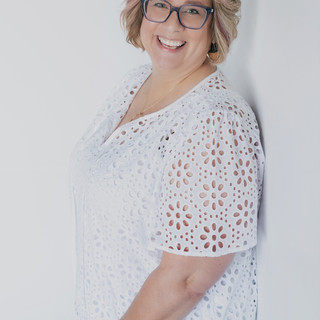
Katie Flinn, ERYT, Somatic Experiencing® Practioner, Founder - COIL Yoga
For more than two decades, Katie Flinn, RYT, Somatic Experiencing Practitioner (SEP), has dedicated her career to exploring the relationship between movement, consciousness, connection, and the mind-body experience. As the founder and owner of COIL Yoga in California’s Central Valley for more than 20 years, Katie has cultivated a space where yoga extends beyond physical practice, inviting greater self-awareness, embodied connection, and a deeper understanding of oneself.
Katie’s journey into movement began at just 18 years old, when she started teaching step aerobics. While attending Fresno State, a friend introduced her to yoga. Although her initial experience was met with mixed feelings, she gradually discovered something that would shape the direction of her professional life: the profound relationship between the body, mind, and our capacity for awareness.
By age 25, Katie had opened her own studio, COIL Yoga, establishing what would become a longstanding presence in the Central Valley’s yoga community. She completed her 200-hour yoga teacher training through the Santa Barbara Yoga Center and continued expanding her expertise through advanced study and education. In 2018, she hosted a 300-hour yoga teacher training program at her studio, contributing to the education and development of other yoga teachers. Her pursuit of therapeutic yoga training further expanded her ability to support individuals navigating complex health experiences, including cancer and autoimmune conditions.
Katie’s commitment to understanding the body as an integral part of human experience eventually led her to Somatic Experiencing® (SE™), a body-oriented approach to trauma healing that recognizes the role of the nervous system in responding to stress, overwhelming experiences, and trauma. She began her professional training in 2022 and completed it in 2025, earning the designation of Somatic Experiencing Practitioner (SEP) through Somatic Experiencing International. This specialized training further deepened her work at the intersection of movement, embodied awareness, nervous system regulation, and trauma recovery.
Throughout her career, Katie has demonstrated an enduring commitment to understanding the relationship between the body and our lived experiences. Her work reflects a belief in the importance of awareness, connection, and the capacity to develop a more compassionate relationship with ourselves.
For The Unspoken Change, Katie brings more than two decades of experience working with the body, alongside a perspective informed by yoga, somatic practice, and trauma healing. Her story invites us to consider how we come to understand our bodies, the knowledge we inherit, and the experiences that shape our relationship with ourselves across the lifespan.
The Interview
Who first taught you about menopause? Your mother, family, school, friends?
When Katie first began noticing changes in her body, she turned to online research and conversations with her OB-GYN, hoping to better understand what she was experiencing. During the COVID-19 pandemic, she began noticing fluctuations in her physical and emotional well-being, including symptoms she had never considered might be connected to menopause.
Like many women, Katie had entered this stage of life with a limited understanding of what to expect. She anticipated hot flashes, but her experience was far more complex. Tinnitus, heart palpitations, irritability, and persistent low energy became part of her daily experience. These were changes she could feel, but did not yet have the information or language to fully understand.
For someone whose life and professional work had been devoted to movement, body awareness, and the mind-body connection, navigating unfamiliar changes in her own body brought another layer of uncertainty. Even with her experience and knowledge, recognizing what was happening was not necessarily straightforward.
Without someone in her personal life who could share a similar experience, Katie often found herself searching for answers on her own. She researched, asked questions, and sought guidance from medical professionals, yet the information she encountered did not always offer the clarity or reassurance she needed. There was a gap between what she was experiencing and what she had been prepared to understand.
Were there any things about menopause that you were surprised to learn from your clients who have experienced it?
Katie was surprised by how many different symptoms might arise during the transition. She recalled undergoing a cardiac evaluation, including an EKG and heart monitoring.
She also learned possible connections between menopause and tinnitus through podcasts featuring Dr. Mary Claire Haver. These discoveries expanded her understanding of how menopause can affect women beyond the commonly discussed hot flashes.
Her experience highlights how confusing it can be to experience unfamiliar symptoms without knowing what is causing them or even where to turn for reliable answers.
Expectations, Fears, and Change
Did you have any fears or negative expectations about menopause? Where do you think those ideas came from?
Katie had grown up in an environment where menopause was not openly discussed. As she entered this stage of life, she didn't know what to expect. Worries such as gaining weight or sweating… a lot, was what she hoped she would not experience. However, Katie emphasized that every woman’s experience is different. Factors such as genetics, physical health, emotional well being, and individual resilience may influence how women navigate this transition.
Her perspective challenges the idea that menopause follows one predictable path - that women experience this journey in many ways. For Katie, part of the fear came from not knowing how her own body would change. This is the felt gap of the difference between what one fears vs what one expects and not know what they will experience. - and the reliability of guides along the way.
What are three emotions that come up most often when you think about menopause?
“Depression, Overwhelmed, Acceptance”
Did you expect menopause to change the way you saw yourself or your femininity?
Katie explained that menopause encouraged her to pay closer attention to her health and changing needs.. As she entered her 50s, she began to reevaluate her routines and invest more time in her changing body’s wellness needs.
She started exploring hormone replacement therapy with her healthcare provider, paying closer attention to nutrition, and incorporating weightlifting into her routine. She noticed positive changes in her joints and recognized the importance of specific exercise as well as nutrition that would help her support her health throughout this transition.
These changes were not things Katie had necessarily, even with more than 20 years in mind body care, had anticipated as necessary. Instead, her menopause transition has prompted her to reimagine her body, and what she needed and wanted for herself.
Are there aspects of menopause that you think women can come to feel positively about?
Katie was honest that she did not feel the need to find a positive side to every aspect of menopause. However, she did mention a small benefit she appreciates: spending a little less money on waxing.
Her answer brought humor to a conversation that can often feel very heavy and overwhelming. It also reminded me that women do not have to view menopause as entirely positive to navigate it with acceptance.
“Be nicer, especially if they’re sweating. Kind and empathetic, get that woman an ice pack or offer a cold drink.”
— Katie Flinn
What do you wish men and women would understand about menopause?
She emphasized that menopause can affect the brain and a woman’s everyday experience. Katie advises people to be more patient when a woman going through this transition loses their train of thought or struggle with concentration.
She also encourages people to respond to physical discomfort with simple, meaningful gestures. For example, offering a cold drink or an ice pack to a woman experiencing hot flashes.
For Katie, understanding menopause means listening without judgment and recognizing that its effects are not always visible.
What do you wish you had been told about menopause when you were my age?
“It’s important to have a good relationship with yourself, and who’s modeling that for young women? It’s easy to get into your head and be negatively influenced by social media.”
Reflections on The Interview
What stood out to me as a young woman in her 20s, was Katie’s frustration with how menopause is misunderstood by others. When symptoms are dismissed, women may feel they have to explain themselves during an already difficult transition. I believe this is why menopause education should extend beyond just us women, but to our partners, families, and communities.
Katie's experience also reminded me that menopause involves so much more than just hot flashes. Her symptoms, including tinnitus and heart palpitations, left her searching for answers. It dawned on me how unsettling it can be when your body begins to change and we don't have the proper resources to know why.
Her professional journey also connected to what I am learning about the mind body relationship. Through yoga and somatic approaches, she has explored how physical sensations, emotional experiences, and responses to stress can influence one another. Her story is a reminder that supporting others requires a willingness to keep learning.
Ultimately, this interview reinforces the importance of education, self awareness, and compassion. Women deserve reliable information about our bodies throughout every single stage of life, along with support to advocate for our needs.
Menopause is a personal journey, but the responsibility to understand it should not fall on women alone. The more openly we advocate and create space for menopause, the more women can feel informed, supported, and understood.
Learn More
Connect with Katie Flinn
Website: https://coilyoga.com/
Instagram: coil_yoga
About Somatic Experiencing® (SE™)
Katie is also a Somatic Experiencing Practitioner (SEP), trained in a body-oriented approach to trauma healing developed by Dr. Peter Levine. Somatic Experiencing focuses on how stress and trauma affect the nervous system, using awareness of bodily sensations to support regulation and recovery. Drawing on more than 25 years of yoga teaching, Katie integrates somatic practices, therapeutic yoga, breathwork, and consent-based touch to support individuals in developing a greater sense of safety and connection within their bodies. Learn more about Katie's work at COIL Yoga and Somatic Experiencing at traumahealing.org or her practice profile Katie Flinn
About Lucine
Hi, I’m Lucine Ohanian, a psychology major in my final year at Fresno State. I’ve always been interested in understanding people, their experiences, and the stories that shape who they become. As I continue this journey into psychology, I hope to use what I learn to support and empower others, especially women.
Outside of psychology, writing has always been a meaningful part of who I am. I love writing poetry because it gives me space to put feelings into words that might otherwise go unspoken. Through this blog, I hope to share my thoughts, experiences, and reflections while continuing to learn about myself and the world around me.
Disclaimer
The Unspoken Change is an educational interview and reflection series written by Lucine Ohanian, an undergraduate psychology intern with Julie Cardoza, LMFT. The series reflects Lucine’s learning and the personal experiences and perspectives of those interviewed. Interview content does not necessarily represent the clinical opinions of Julie Cardoza, LMFT.
This series is for educational and informational purposes only and is not psychotherapy, medical advice, diagnosis, or treatment. Individual experiences of perimenopause, menopause, trauma, mental health, and health care vary. Questions about personal symptoms, medications, hormone therapy, or treatment should be discussed with an appropriately qualified health care professional.
About The Menopauses™
There is more than one menopause—and more than one way to experience it.
The Menopauses™ explores the psychology of natural, early, surgical, treatment-induced, and other menopause experiences, including the ways our bodies, histories, identities, relationships, and social worlds shape the transition.
It is a growing educational project created by Julie Cardoza, LMFT, bringing greater attention to the space between menopause care and mental health care.
Explore The Menopauses™ →

Comments